
God of War or Prince of Peace?

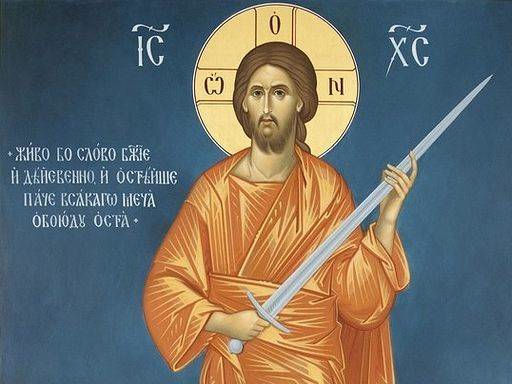
"Si vis pacem, para bellum" — “If you want peace, prepare for war.” — Attributed to Vegetius
I am a proud Protestant for many reasons. One of the most significant is that I have no theological obligation to regard the Pope's words as more authoritative than those of the pastor at a small non-denominational church down the street. The Reformation's doctrine of the priesthood of all believers teaches that no special spiritual class has exclusive access to God. Every Christian stands equally before Him by grace through faith alone.
For that reason, I do not place special weight on the Pope's pronouncements. Yet I recognize that he is the leader of the Catholic Church and, by extension, a spiritual influence on nearly 1.5 billion people worldwide. Whether one agrees with him or not, his influence on both the Church and the broader world cannot be overstated. His words matter, and their effects often reach far beyond Catholicism itself.
Recently, Pope Leo XIV has condemned the escalating conflict with Iran and repeatedly called for peace negotiations rather than military action. While it is both expected and commendable for a Pope to advocate for peace, some of his recent remarks seem to imply something more—that all military conflict should be avoided, and perhaps that no conflict could ever meet the criteria of a just war.
Among his notable statements:
"Search always for peace and reject war."
Referring to threats against Iran and its people: "This is truly unacceptable."
"Come back to the table. Let's talk. Let's look for solutions in a peaceful way."
"God does not bless any conflict."
God does not side with "those who yesterday wielded the sword and today drop bombs."
This article is not about whether America should be at war with Iran, nor is it an evaluation of current foreign policy. The issue is much broader. Rather, I want to challenge what I understand to be the Pope's position—and, by extension, the broader pacifist conviction that God never blesses conflict, that all war is inherently immoral, and that maintaining peace through strength is contrary to the teachings of Christ.
The Christian Roots of Just War
Given the Church's history, it is interesting that the current Pope appears to have arrived at this conclusion.
It was Augustine of Hippo in the late fourth and early fifth centuries who laid the foundation for what would become Just War Theory. Augustine argued that while war is always a tragic consequence of living in a fallen world, it can be morally permissible when used to restrain evil and protect the innocent. For Augustine, a Christian could fight—not because violence is good, but because refusing to confront evil may be worse.
Following the rise of Islam in the seventh century, these questions became far more than theoretical. Muslim armies conquered historically Christian territories including Jerusalem, Egypt, North Africa, much of Spain, large portions of Anatolia, the Balkans, and eventually Constantinople itself in 1453.
The conflict between Christian and Muslim powers is not a modern phenomenon. The very walls surrounding Vatican City were originally constructed in the ninth century in response to Muslim raids against Rome. Later, during the era of the Crusades, Thomas Aquinas further refined Augustine's ideas by establishing specific criteria for a just war in his Summa Theologica.
Since then, Just War Theory has remained a central part of Christian moral thought and has influenced how Christian nations have understood the use of force in defense of themselves and others.
This raises an important question:
Is the God of the Bible a God of war or the Prince of Peace?
The Lord of Hosts
I realize that calling God a "God of War" will make some Christians uncomfortable. We rightly long for peace. We worship the Prince of Peace. Yet to deny that God is also portrayed as a divine warrior is to ignore a substantial portion of Scripture.
Too often Christians are tempted to embrace the attributes of God they find comforting while dismissing those they find unsettling. Historically, this impulse bears an uncomfortable resemblance to the ancient heresy of Marcionism, which sought to separate the God of the Old Testament from the God revealed in Christ. And given the zeitgeist of our anti semitic times, there is a strong undercurrent for Christians to basically do away with the Old Testament and anything Jewish — but that’s an issue for another article.
Consider one of God's most common titles in Scripture: "The LORD of Hosts."
This title appears more than 250 times in the Old Testament. The word hosts literally refers to armies. The title presents God as the supreme commander of heaven's armies and the sovereign ruler over all earthly powers.
In Exodus 15:3, after Israel's deliverance from Egypt, Moses declares:
"The LORD is a warrior; the LORD is his name."
God is portrayed not merely as a passive observer of history but as one who actively fights against evil and delivers His people.
Likewise, David—described as "a man after God's own heart"—was also a man of war. David praises God saying:
"Praise be to the LORD my Rock, who trains my hands for war, my fingers for battle." (Psalm 144:1)
Similarly, Isaiah writes:
"The LORD will march out like a champion, like a warrior he will stir up his zeal." (Isaiah 42:13)
This image of God as the Lord of Hosts is not an isolated theme. It runs throughout the biblical narrative.
But What About Jesus?
The objection usually comes quickly. "That may be true of the Old Testament, but we are under the New Covenant."
Certainly the New Testament calls Christians to peace. We are commanded to:
* Love our enemies.
* Turn the other cheek.
* Live at peace with everyone, insofar as it depends on us.
* Be peacemakers.
And when Peter drew his sword and cut off Malchus's ear, Jesus clearly rebuked him:
"Put your sword back into its place." (Matthew 26:52)
All of that is true. Yet before we proceed, we must remember a fundamental Christian doctrine: the God of the Old Testament is the God of the New Testament. The Son did not suddenly appear in Bethlehem. The pre-incarnate Christ was active throughout the Old Testament. Unless we are willing to deny the Trinity, we cannot separate the Father's actions in the Old Testament from the Son's identity in the New. The Father, Son, and Holy Spirit are eternally one God.
Therefore, the same Christ who welcomed children also commanded Joshua to destroy the Canaanites. The same Christ who wept over Jerusalem also judged nations. And the same Christ who carried a cross will one day wear a crown.
The Sword and the State
The commands to love enemies, turn the other cheek, and pursue peace are directed primarily toward individual believers. They govern our personal conduct. Governments, however, have a different responsibility.
According to Romans 13:
"For the one in authority is God's servant for your good. But if you do wrong, be afraid, for rulers do not bear the sword for no reason."
Government exists, at least in part, to restrain evil and protect the innocent. That responsibility necessarily involves the possibility of force. This distinction has been at the heart of Just War thinking for centuries.
The Prince of Peace Who Wages War
Consider the that the same Jesus who said: "Blessed are the peacemakers" (Matthew 5:9) will be the same Jesus from whose mouth will extend a sword with which he will judge the nations. (Revelation 19:15).
Similarly, the same Jesus who told Peter to put away his sword is also the One who will rule with an iron scepter.The same Jesus who came first as a suffering servant will return as a conquering King.
In Revelation 19:11 we read:
"With justice he judges and wages war."
That verse alone should give pause to anyone who believes all warfare is inherently immoral. Scripture presents a God who loves peace but is not pacifistic. He is patient, merciful, and longsuffering, yet He is also holy, just, and willing to confront evil. As Ecclesiastes reminds us:
"There is a time for war and a time for peace." (Ecclesiastes 3:8)
Peace Through Strength
Ultimately, the biblical story ends not with a negotiated settlement between good and evil but with God's final victory over evil itself. There will be no ceasefire with Satan, no peace treaty with wickedness, and no rehabilitation program for rebellion. Evil will be eradicated by the brute spiritual force of our Triune God. The final peace of God's Kingdom arrives only after evil has been decisively defeated.
In that sense, the old Roman maxim contains a measure of truth:
"Si vis pacem, para bellum"—"If you want peace, prepare for war."
The meta narrative of Scripture points toward a similar reality. Lasting peace comes not through the absence of conflict but through the ultimate triumph of righteousness. For that reason, I believe the concept of peace through strength is not foreign to the Bible. It is a reality of living in a fallen world until Christ returns.
So perhaps the question is not whether Jesus is the God of War or the Prince of Peace. The question is whether we are willing to acknowledge that Scripture presents Him as both.
But what do you think?
Micah Coate
President & Host, Salvation and Stuff


Comments